

Executive dysfunction, also known as dysexecutive functioning, often appears years before memory problems become obvious. While most people associate cognitive decline with forgetting names or misplacing keys, executive dysfunction manifests differently: difficulty planning a meal, struggling to complete multi-step tasks, making poor financial decisions, or losing the ability to organize daily routines.¹,² These functions are controlled by the prefrontal cortex, the brain's command center for planning, decision-making, impulse control, and goal-directed behavior.³,⁴ Research from the Baltimore Longitudinal Study of Aging found that executive function begins declining 2–3 years before a dementia diagnosis, following an initial memory decline that starts approximately 7 years before diagnosis.⁵ This makes executive dysfunction a crucial early warning signal that something deeper may be happening in the brain. Yet because these symptoms don't fit the stereotypical "forgetting things" narrative of cognitive decline, they frequently go unrecognized and can be dismissed as stress, aging, or simply "having a bad day."¹,²

The challenge with executive dysfunction is that the person experiencing it often lacks awareness of their own decline, a phenomenon called anosognosia.⁶,⁷ Someone with early executive dysfunction may not realize they've stopped planning activities, avoided complex tasks, or made increasingly poor judgments. This is where caregivers become essential. Research on frontotemporal dementia, a condition where executive dysfunction is often the first and most prominent symptom, reveals that caregivers are typically the first to notice changes. These can entail decreased initiative, difficulty following through on plans, emotional detachment, and struggles with tasks that once came naturally.⁶,⁷,⁸ One caregiver in a study on behavioral variant frontotemporal dementia described it powerfully: "The executive problems are actually his largest problem, there is no cause-and-effect anymore. The fact that he does not know how to do certain things. That concerns… basically everything."⁶ Caregivers notice what the person themselves cannot see: the erosion of the cognitive "glue" that holds daily life together. Studies consistently show that when caregivers are trained to recognize these signs and actively engage their loved ones in cognitive stimulation, outcomes improve significantly, and not just for the person experiencing decline, but for the caregiver's own sense of agency and reduced burden.⁹

The good news emerging from neuroscience research is that executive function is trainable, and the prefrontal cortex responds to targeted cognitive challenges with measurable neuroplastic changes.¹⁰,¹¹ A meta-analysis of neuroimaging studies found that effortful cognitive training (the kind that requires sustained mental effort and challenges working memory, attention, and cognitive flexibility) induces greater activation in the superior frontal gyrus, a core brain region supporting executive functions and general intelligence.¹⁰ This is consistent with studies showing that cognitive training can improve executive function performance and increase prefrontal cortex activity in both healthy older adults and those with mild cognitive impairment.¹⁰,¹¹,¹² The key insight is that passive activities don't produce these effects; rather, the brain must be genuinely challenged. Research on early-onset Parkinson's disease using fNIRS (functional near-infrared spectroscopy) demonstrated that prefrontal cortex dysfunction -- specifically in the dorsolateral prefrontal cortex (DLPFC), medial prefrontal cortex, and ventrolateral prefrontal cortex -- underlies executive function impairment and may serve as an early biomarker for cognitive decline.¹³ These findings point toward a critical opportunity: intervene early with targeted prefrontal cortex training to strengthen executive function before decline accelerates.
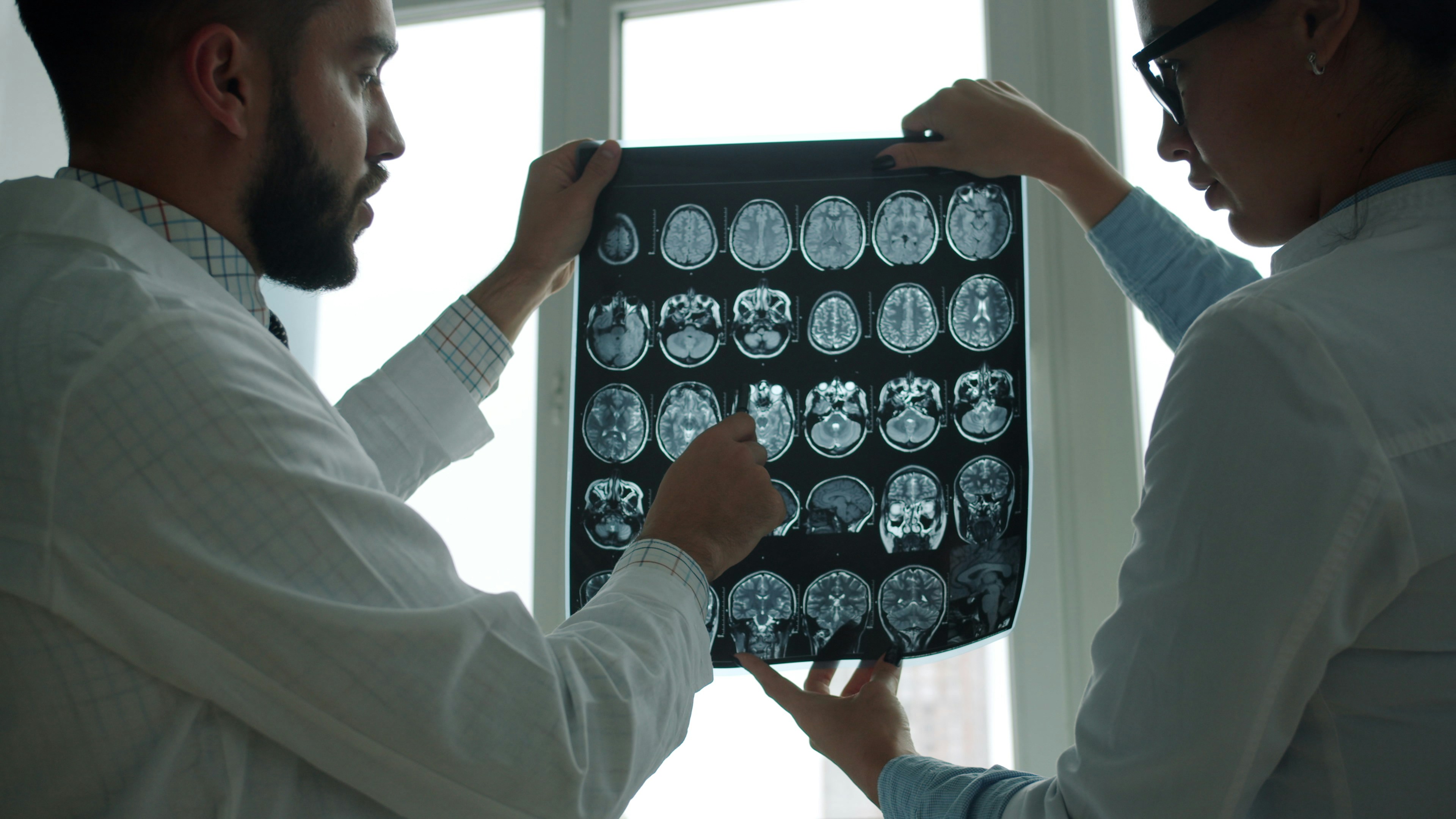
This is where technology like Thinkie offers a unique advantage. Thinkie uses the same fNIRS technology that researchers employ to study prefrontal cortex function, measuring blood flow changes in real time to show whether cognitive activities are genuinely engaging the brain regions responsible for executive function.¹⁴,¹⁵ Unlike generic brain-training apps that provide no objective feedback, Thinkie's Brain Meter displays a color-coded visualization (from cool blues to warm oranges and reds) showing how hard your prefrontal cortex is working during any activity.¹⁴ This both empowers individuals and their caregivers to take initiative in protecting cognitive health, rather than passively hoping for the best. If you're planning a meal and the Brain Meter shows sustained prefrontal engagement, you know that the activity is genuinely challenging your executive functions. If you're doing a crossword puzzle and the colors barely shift, you know that the task has become habituated and is no longer providing cognitive benefit.¹⁴,¹⁵ Caregivers can use this feedback to identify which activities genuinely engage their loved one's brain, creating personalized cognitive maintenance routines based on objective data rather than guesswork.

Randomized controlled trials show that consistent Thinkie users achieve an average 3.7-year brain age reduction in just three months, with improvements specifically in working memory, processing speed, and attention, which are the core components of executive function.¹⁶ For caregivers watching a loved one struggle with early executive dysfunction, and for individuals who want to take proactive control of their cognitive future, Thinkie transforms brain training from an act of hope into an act of measurable, verifiable self-care.
Sources
- Medium/Wise & Well. "The Dementia You Have Never Heard of Until Now." https://medium.com/wise-well/the-dementia-you-have-never-heard-of-until-now-974519f632d2
- Cleveland Clinic. "Executive Dysfunction: What It Is, Symptoms & Treatment." October 28, 2025. https://my.clevelandclinic.org/health/symptoms/23224-executive-dysfunction
- Headway. "Executive dysfunction." https://www.headway.org.uk/about-brain-injury/individuals/effects-of-brain-injury/executive-dysfunction/
- NIH/PMC. "The role of prefrontal cortex in cognitive control and executive function." August 17, 2021. https://pmc.ncbi.nlm.nih.gov/articles/PMC8617292/
- NIH/PMC. "Memory impairment, executive dysfunction, and intellectual decline in preclinical Alzheimer's disease." June 14, 2000. https://pmc.ncbi.nlm.nih.gov/articles/PMC2763488/
- NIH/PMC. "A caregiver's perspective on clinically relevant symptoms in behavioural variant frontotemporal dementia." October 30, 2022. https://pmc.ncbi.nlm.nih.gov/articles/PMC10092374/
- NIH/PMC. "Caring for loved ones with frontotemporal degeneration." May 29, 2013. https://pmc.ncbi.nlm.nih.gov/articles/PMC3867267/
- Family Caregiver Alliance. "Frontotemporal Dementia." September 9, 2025. https://www.caregiver.org/resource/frontotemporal-dementia/
- NIH/PMC. "Caregiver training: Evidence of its effectiveness for cognitive and functional benefits in older adults." March 23, 2022. https://pmc.ncbi.nlm.nih.gov/articles/PMC10078788/
- NIH/PMC. "Effortful and effortless training of executive functions improve brain activations." November 13, 2023. https://pmc.ncbi.nlm.nih.gov/articles/PMC10682784/
- NIH/PMC. "Executive Dysfunction in MCI: Subtype or Early Symptom." May 29, 2012. https://pmc.ncbi.nlm.nih.gov/articles/PMC3369514/
- JAMA Network. "Executive Dysfunction in Alzheimer Disease." March 31, 2004. https://jamanetwork.com/journals/jamaneurology/fullarticle/785628
- PubMed. "Executive Dysfunction and Prefrontal Cortex Dysregulation in Early-Onset Parkinson's Disease: An fNIRS Study." May 21, 2025. https://pubmed.ncbi.nlm.nih.gov/40464472/
- Thinkie System. "How Thinkie Combines Neuroscience and Technology for Superior Brain Training." May 5, 2025. https://www.thinkiesystem.com/blog/how-thinkie-combines-neuroscience-and-technology-for-superior-brain-training
- Thinkie System. "How Thinkie's fNIRS Brain Training Technology Works." January 14, 2025. https://www.thinkiesystem.com/the-science
- Thinkie System. "Unveiling Actual Users' Remarkable Brain Age Improvement using Thinkie Technology." March 6, 2025. https://www.thinkiesystem.com/blog/unveiling-actual-users-remarkable-brain-age-improvement-using-thinkie-technology